The science of nasal breathing
A closer look at why breathing through your nose overnight matters, and how Drift Easy supports it.
Why nasal breathing matters
Your nose is built for breathing. As air passes through the nasal passages, it's filtered, warmed, and humidified before it reaches your lungs — none of which happens when you breathe through your mouth. Nasal breathing also encourages slower, deeper breaths, which is closely linked to more restful, uninterrupted sleep. Many people don't think about how they breathe at night at all — but for a lot of us, it's quietly working against a good night's rest.
What happens when you mouth breathe
When the mouth falls open during sleep, air moves in and out faster and less efficiently. This dries out the mouth and throat, which is a common reason people wake up with a dry mouth or sore throat. Mouth breathing also makes the soft tissue at the back of the throat more likely to vibrate as air passes over it — one of the main causes of snoring. Over the course of a night, this can add up to a lighter, more disrupted sleep, even if you don't remember waking up.
How mouth taping works
Mouth tape is a simple, gentle strip worn across closed lips during sleep. It doesn't force your jaw shut or restrict your breathing — instead, it's a light reminder that keeps your lips closed so your body defaults to breathing through your nose. Most people find it takes a night or two to get used to, and it's designed to be comfortable enough to forget about once you're asleep. If your nose is significantly blocked, it's worth pairing mouth tape with nose tape, or addressing the congestion first.
How nasal strips help
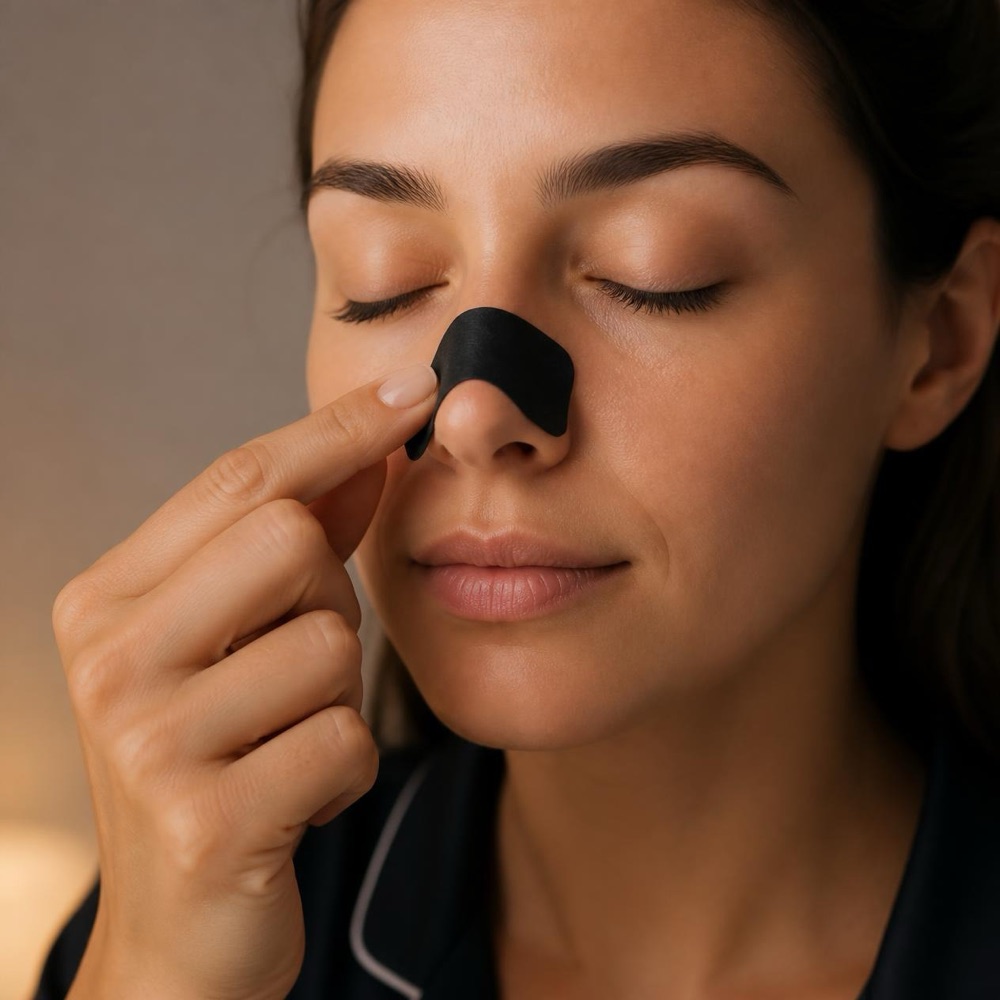
Nose tape works differently — rather than closing anything, it gently lifts and widens the nasal passages from the outside, using a flexible spring built into the strip. This makes it physically easier for air to move through your nose, which is especially useful if you find your nose feels tight or partially blocked at night. Many people use nose tape and mouth tape together: the nose tape opens the airway, and the mouth tape helps make sure that open airway is the one you're actually using.
Common questions
Is it safe to tape your mouth shut? For most people, yes — the strips are designed to be worn comfortably and can be removed at any time. They're not intended to treat any medical condition, and if you have ongoing breathing difficulties at night, it's worth speaking to a doctor. For everyone else, mouth and nose tape are a simple, drug-free way to support nasal breathing and work towards a better night's sleep.
Curious how it feels in practice?
Explore Mouth Tape